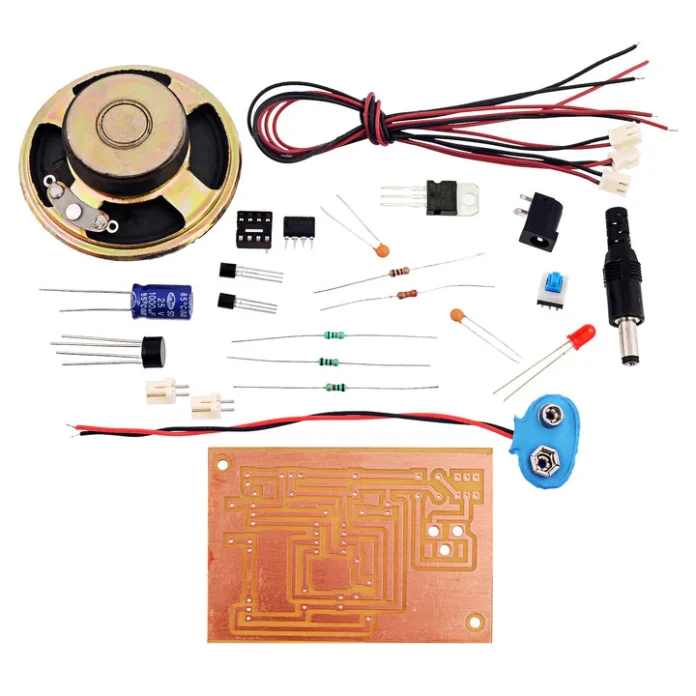
If you’ve ever tinkered with electronics at home, or maybe just tried to figure out why your lamp suddenly gave up on life, you’ll know the feeling: you’re standing there with a screwdriver in one hand, a YouTube video paused on your phone in the other, and that look of “what now?” written all over your face. For many of us, that’s the moment where simple testing tools quietly step in to save the day.
There’s something oddly satisfying about diagnosing an electrical hiccup yourself instead of waiting for the repair guy or throwing the thing away. It’s empowering in a small but meaningful way, and it reminds you that the tools we often overlook can actually feel like tiny superpowers.
When the Basics Matter More Than You Think
It’s easy to get caught up in the flashy side of technology—smart homes, AI gadgets, or wearables that track the number of steps you didn’t take today. But the truth is, much of the reliability in our everyday devices comes down to really basic principles. Wires carrying current, switches opening and closing, sensors quietly detecting things and making decisions on our behalf.
That’s where the humble continuity tester comes in. It’s not glamorous. Nobody’s bragging about one on Instagram. But it’s one of those tools that tells you something simple yet incredibly valuable: is the circuit actually connected, or is there a break hiding somewhere? A tiny beep or light can save hours of frustration, not to mention unnecessary guesswork.
Think about it—without a basic tool like this, you’d be poking around blindly, tightening screws, replacing bulbs, swapping out batteries, hoping for a miracle. Instead, with a quick test, you know what’s working and what’s not. Simple clarity, right when you need it.
The Quiet Heroes of Sensing
While testers help us figure out what’s broken, sensors make sure things run smoothly in the first place. Some of the most reliable ones don’t get nearly enough credit.
Take the reed switch sensor for example. It’s tiny, cheap, and kind of old-school by today’s standards. Yet it’s in everything from door alarms to bike computers to washing machines. The idea is almost too simple: two metal reeds sealed in glass that come together when a magnetic field is nearby. That’s it. No drama, no expensive circuits. Just open and close.
But here’s the magic—you’ll find these little sensors in places where precision matters. Your alarm system knows the door has been opened because of one. Your car’s gear shift might rely on it too. And because it doesn’t need much power and doesn’t wear out quickly, it’s often the quiet, long-term solution hiding in plain sight.
Sometimes I think about how many of these little reeds are silently clicking on and off around us every single day, making life just a bit more secure or convenient without us noticing. It’s like the unsung rhythm section in a band—you don’t always hear it, but you’d definitely notice if it stopped playing.
Why Simplicity Still Wins
Here’s the thing: in an age where everything feels like it has to be “smart” or “connected,” the tools and components that last tend to be the ones that stick to simplicity. That’s not nostalgia—it’s practicality.
A fancy digital tester with a bright LCD screen might look impressive, but when you’re in the middle of a messy project with sweaty hands, a rugged little beep-and-light tool does the job better. Same with sensors—sure, you could have a complex optical setup with software calibration, but if all you need is “door open” or “door closed,” a reed switch beats it hands down.
It’s the same reason people still carry pocket knives even though you can buy specialized gadgets for everything. There’s beauty in straightforwardness. Tools that do their job, no more and no less, have a way of sticking around across decades.
The DIY Spark
There’s also something personal here. Anyone who’s spent a lazy Sunday afternoon poking around inside a stubborn appliance knows that moment of triumph when you finally track down the problem. It’s not about saving money (though that helps). It’s about the sense of capability.
Maybe you fixed that old toaster. Or you finally figured out why your bike’s speedometer wasn’t registering. These aren’t earth-shattering victories, but they’re the kind of wins that add a little confidence to your day. And more often than not, they start with simple tools and sensors that don’t overcomplicate things.
Where It All Comes Together
What I love about this whole topic is how it brings you back to fundamentals. At the end of the day, electrical systems—whether in your home, your car, or your gadgets—aren’t mysterious. They follow rules. Current flows when there’s a path. Switches open and close. Sensors detect changes and trigger responses.
Tools like testers and simple sensors make these invisible processes visible to us. They shine a light on the hidden workings of technology, reminding us that behind every sleek gadget is a world of tiny, reliable, often uncelebrated components just doing their job.
A Final Thought
I think we sometimes underestimate how much peace of mind can come from simplicity. In a noisy, complicated world, having tools that give you quick answers without fuss is refreshing. It’s almost meditative—the beep that confirms your circuit is intact, the little click of a sensor quietly doing its job.
It’s a reminder that not every problem needs an app or an expensive piece of hardware. Sometimes all it takes is a bit of patience, a reliable tool, and the willingness to poke around until things make sense again.
So next time you’re tempted to toss something out because “it doesn’t work,” maybe take a step back. With the right tester in hand and an appreciation for the small but mighty sensors tucked inside, you might just surprise yourself with what you can fix. And hey, even if you don’t, you’ll have learned something new about how the things around you actually work.
That, in itself, feels like a small victory worth celebrating.